Six years after Nepal passed its radiation law, most hospitals lack a license, the oversight division doesn’t exist, and staff at major hospitals say they have never received dosimeter badges.
Computed tomography scans, widely known as CT scan services, were suspended for a month at the Shahid Dharmabhakta National Transplant Center following a radiation leak outside the CT scan room in June 2025. The machine, installed back in 2018, was never inspected after the installation, nor were the workers monitored for radiation exposure. This incident went unreported by news outlets. Nor was it isolated. A similar event had occurred six years earlier at Bir Hospital. 
The incident at Dharmabhakta Transplant Center comes after the establishment of two distinct regulations, the Radioactive Substances (Utilization and Regulation) Act, 2020, and Health Institution Operation Standards, 2020 designed to prevent incidents of such nature. Both the documents clearly state the requirement of timely monitoring of occupational exposure levels of the workers and regular safety checks of the machinery. Years later, implementation of both still seems lacking or nonexistent.
Radiology in Nepal has advanced significantly since the 1920s, playing a significant role in both diagnosis and treatment. Nepal’s law is clear on what hospitals must do. They must be licensed, their machines must be inspected, and their staff must be monitored for radiation exposure. Six years after the Radioactive Substances (Utilization and Regulation) Act, 2020 was passed, it remains largely on paper. Eight facilities, holding valid permits, are licensed to operate radiation-emitting equipment. The dedicated regulatory division mandated by the Act has never been formed; the ministry stated in response to our Right to Information (RTI) request.
Even the dosimeter badges that the Nepal Academy of Science and Technology claims to supply to nearly 239 hospitals were absent at Bir Hospital and the National Trauma Centre, where staff reported never having received them. This shows Nepal still lacks proper Radiation Protection Infrastructure to control the use of ionizing radiations in medicine.
Limits and definition of radiation accident
The Radiation incident at Shahid Dharmabhakta National Transplant Center only came to light after a radiation survey conducted under the Ministry of Education, Science and Technology, which was split on May 13, 2026, into the Ministry of Science, Technology and Innovation and the Ministry of Education and Sports.
As per Dharmabhakta Transplant Center’s statement, the test was conducted based on the demand and request of the concerned staff, and upon receiving information that it was unsafe for human health, the operation of the CT Scan Machine was suspended, and a request was made to the then Ministry of Education, Science and Technology for a detailed study and examination of the matter.
The highest radiation leakage occurred at the entry door of the control room, where the measured dose rate was 147 μSv/hr, according to a July 15, 2025 inspection report by Rajan Panthi, Inspector of the then Ministry of Education, Science and Technology and reviewed by NIMJN. The exit door leading to the public corridor recorded 70 μSv/hr, the viewing window measured 13 μSv/hr, and the radiologist’s chair measured 25 μSv/hr. The entry door to the control room’s measured value exceeded the maximum recommended limit by 139.5 μSv/hr, or nearly 20 times. The radiologist’s chair exceeded the occupational limit by 17.5 μSv/hr, or more than three times the allowable level.
According to the Radioactive Substances (Utilization and Regulation) Act, 2020 and International Commission for Radiation Protection (ICRP), the recommended level of radiation for the public is under 1 millisieverts per year (mSv/yr) and that for individuals working in radiation related fields at 20 millisieverts per year. When converted to hourly terms, these limits correspond to roughly 0.5 μSv/hr for public areas and 7.5 μSv/hr for occupational areas.
Radiation-based imaging and treatment are invaluable to modern medicine, but must follow the international safety standards for their safe operation. Radiation is measured in millisieverts. The millisievert (mSv) is a unit indicating the effect of radiation on living organisms and 1 millisievert is the annual dose limit for the general public. A CT scan typically delivers 1–10 mSv of radiation, though the precise dosage varies by body part.
According to a June 17, 2019 inspection report, conducted by NAST inspector Bipin Rijal and reviewed by NIMJN, a radiation leak was detected at Bir Hospital’s radiology unit door, with readings reaching 13.95 μSv/hr at the lead-lined entrance facing the patient waiting area. The recommended limit for an uncontrolled (public) area is 0.5 μSv/hr. Therefore, the measured dose rate exceeded the limit by 13.45 μSv/hr or approximately 28 times.
The console room separated by lead glass recorded 2.12 μSv/hr, indicating radiation leakage through the lead-glass window. Another console room location measured 1.02 μSv/hr, while the room next to the patient waiting area measured 0.24 μSv/hr, which was within the recommended public limit.
“Excessive radiation leakage exposes healthcare workers, patients, and visitors to unnecessary ionizing radiation, increasing the long-term risk of cancer, cataracts, and other radiation-induced health effects,” said Dr. Ganga Prasad Sharma, an expert in the field and a Medical Physicist, “It also violates radiation protection regulations and may result in equipment shutdown and costly repairs.”
The licensing
Under the Radioactive Substances (Utilization and Regulation) Act, 2020, any institution working with radioactive materials or radiation-emitting sources must first obtain a license from the regulatory body. Operating without this license is strictly illegal and carries a fine of Rs. 1 to 3 lakhs, imprisonment for 1 to 3 years, or both. Facilities already handling radioactive substances or operating radiation-emitting equipment were granted a one-year grace period to secure an official license from the regulatory body following the Act’s commencement.
As per the Ministry of Science, Technology and Innovation only eight medical institutions have received the required license for import, transport, or operation of medical radiology equipment and radioactive substances.
According to the Nepal Health Factsheet 2025 by the Department of Health Services, there are 8100 public hospitals and 2451 non-public health facilities nationwide, comprising 413 basic hospitals, 377 general hospitals, 43 specialized and super-specialized facilities, and 28 teaching hospitals. All of these institutions employ various radiation emitting equipment and radiation sources for diagnosis and treatment. This number doesn’t include clinics and health care facilities where radiation is used on a regular basis.
The regulatory body
According to the Radioactive Substances (Utilization and Regulation) Act, 2020, the government must establish a regulatory agency within the Nuclear Materials Management Division under the Ministry of Education, Science and Technology. It must include experts in public health, law, physics, atomic science, and radiography. Until that body is formed, the ministry must handle its regulatory duties. The regulatory body is responsible for planning, program formulation, regulation, and assigning roles and responsibilities for the licensed institutions. It also is responsible for the creation of regulations for the protection of humans, animals, property and environment from the effects of ionizing radiation.
However, in response to our Right to Information application, the ministry stated that no such division has been established to date. The Department of Licensing Regulation and Radiation Safety under the Ministry of Science, Technology and Innovation handles the issue.
Timely monitoring
Standards for the Use of Diagnostic Radiology Medical Equipment Act (2025), under the Radioactive Substances (Utilization and Regulation) Act, 2020 Diagnostic X-Ray Equipment must be checked and recertified every two years, while CT scan machines are to be inspected every year by a medical physicist. For Dexa scans and diagnostic equipment, quality assurance tests must be conducted before every operation.
Under the Radioactive Materials (Utilisation and Regulation) Rules, 2022, and Standards for the Use of Diagnostic Radiology Medical Equipment, 2025, general X-ray equipment must be recertified every two years, CT scanners require annual quality inspection by a medical physicist, and DEXA scans and interventional equipment need quality assurance testing before every operation.
Safe radiation levels for workers
To keep occupational radiation exposure in check, regulations from both the Ministry of Health and the Ministry of Science mandate personal radiation monitoring using personal dose monitors, such as Thermoluminescent Dosimeter (TLD) or Optically Stimulated Luminescence Dosimeter (OSLD) badges, to measure individual exposure levels. Standards for the Use of Diagnostic Radiology Medical Equipment, 2025 states that the technical workers working in the radiation field must be provided with personal radiation monitoring devices, and it must be examined every three months. As per the Radioactive Materials (Utilisation and Regulation) Rules, 2022, this dosimetric data must be stored for 30 years and should be provided to the worker on demand.
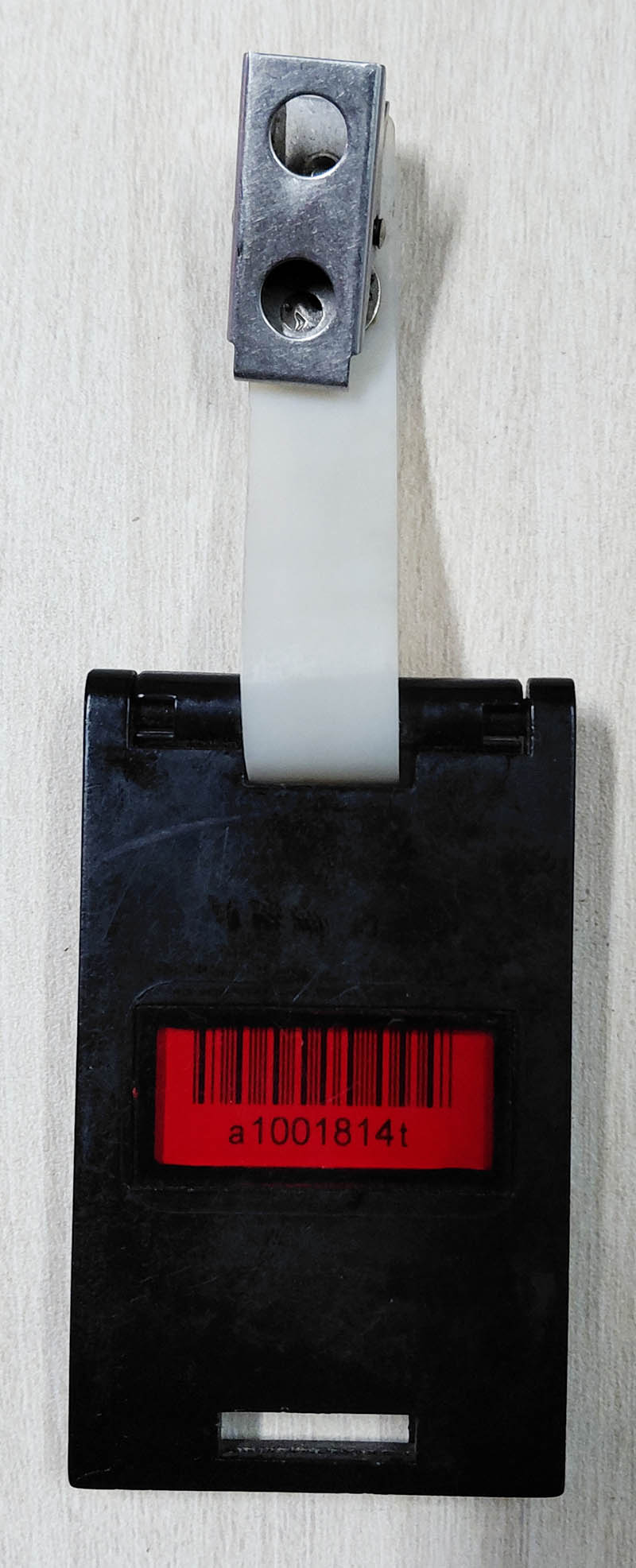
According to domestic guidelines and international bodies, the annual exposure limit is 20 mSv averaged over five years for occupational workers, 6 mSv for students, and 1 mSv for the general public. The guidelines also mandate timely monitoring of the equipment and safety measures.
According to data provided by the Nepal Academy of Science and Technology (NAST), 239 hospitals, comprising 1,431 doctors and technicians, are issued TLD badges and monitored nationwide. However, during our investigation at major government hospitals across the Kathmandu Valley, these badges were largely absent. Even Bir Hospital, which treats the highest number of patients in the country, did not have TLD badges in use. “We have not received any badges yet,” a technician at Bir Hospital said when asked. Resident doctors working in the console room gave the same answer.
The pattern repeated itself at the National Trauma Centre, where staff reported the same absence. At Tribhuvan University Teaching Hospital (TUTH), technicians said badges did exist but were unavailable at the time, having been sent out for reading.
Dr. Tejendra Karki, president of the Nepal Radiologists’ Association (NRA), says the missing badges point to a deeper structural problem: Nepal has a severe shortage of medical physicists and radiation safety officers. Radio-imaging departments, he said, are often understaffed and poorly trained, leaving both patients and healthcare workers increasingly vulnerable to the exact hazards these badges are meant to detect. Dr. Karki also argued that decentralizing radiation safety inspections and dose monitoring would prove far more effective than relying on a single central authority.
Radiography professionals say they have been raising these concerns for years. The Government Radiography Association, Nepal (GO-RAN) is a non-profit organization representing government radiography personnel working under the Ministry of Health and Population, as well as in public and semi-governmental teaching hospitals and health science academies. Its general secretary, Prakash Timilsina, stated that the association has repeatedly approached higher authorities, submitting formal requests to several health ministers over the years.
That disconnect between official regulatory claims and the reality on the hospital floor defines the present state of Nepal’s radiation safety system. The law mandates a regulatory division. Paperwork promises a dose-monitoring badge program. A Radioactive Substances Act exists alongside safety regulations aligned with international standards. What remains absent, six years after the legislation was enacted, is a single official these health facilities can contact to explain why the badges listed on the roster never reached the workers’ necks.
Cover photo : Patients queue outside the CT scan room at Bir Hospital. Photo : Aditi Shrestha/NIMJN
Please adhere to our republishing policy if you'd like to republish this story. You can find the guidelines here.
Comments